The Education Edition
Being the Messenger: Understanding Diversity and Culture in the Classroom. The first application of the Be The Messenger Framework, built for the adults in a school: one full day, delivered by Dr. Starks or by a facilitator he certified. Staff leave knowing how each construct shows up in their own rooms, with strategies they can use the next morning.
Why the day exists
Communities with low educational attainment, chronic unemployment, high poverty, and crime take a toll on a child's ability to perform in school. Often the environment shows up as behavior that has traditionally been read as an unwillingness to learn, and the student ends up with referrals, suspensions, or expulsions because the adults could not relate to the population they were asked to serve. That interferes with the trust and rapport a child needs before any learning happens.
Students learn best when they know their teachers care. The training gives the adults in a building the skills to expand their ethic of care and increase student success, with particular attention to the children most in danger of falling through the cracks. Messengers create an environment where every child can do and be their best.
The four constructs, in a school
The day starts by asking how you define each construct, where your definition came from, and what happens when it meets someone else's. Then it turns to the students in your building.
-
Identity
Who you areThe impact a student's identity has on their educational experience, and how the lens through which society sees a student shapes their journey.
-
Culture
Where you come fromHow the culture of a group is essential to its identity and how it is used to navigate life.
-
Diversity
What connects usHow diversity is so much more than race, class, and gender, and how to teach students that differences are our strengths.
-
Respect
How you show upHow to teach students to treat themselves and others in high regard, and how identity, culture, and diversity overlap into respect for valuing life.
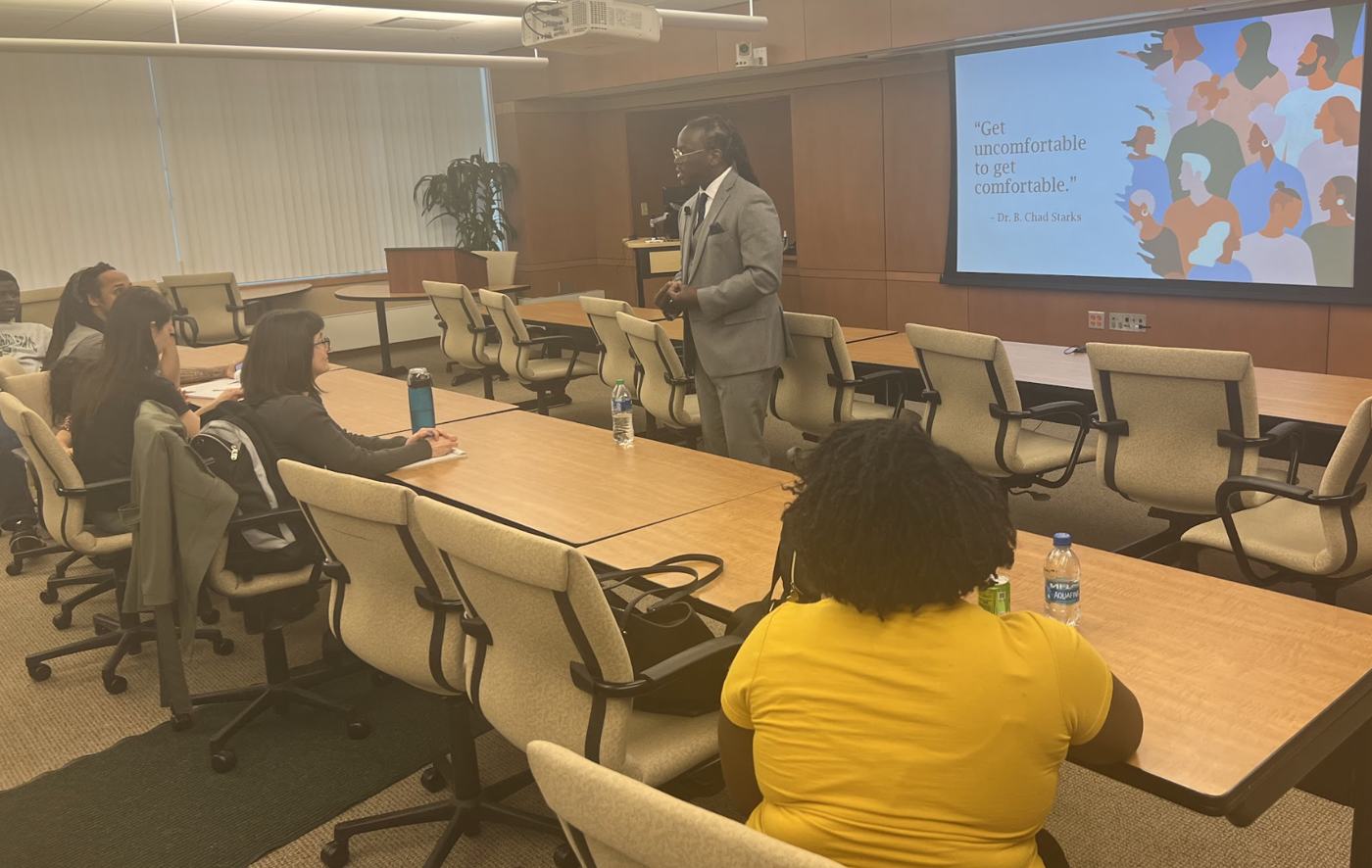
"Get uncomfortable to get comfortable."
The Framework in fullBy the end of the day, participants can
- Know the student's environment: the communities students come from
- Understand the school environment: how the school approaches discipline
- Define the four constructs and use them in the way they teach
- Practice the Messenger Method: Self-Reflection, Self-Awareness, and Self-Consciousness
- Understand bias and privilege
- Understand the collateral consequences of structural inequality
- Become Messengers
Who should be in the room
Classroom teachers, reading specialists, literacy coaches, Title I staff, school administrators, school staff, athletic coaches, and school volunteers. It works best when a whole building, or a whole district leadership team, goes through it together.
What participants learn to do
- See the impact a student's identity has on their educational experience
- Teach students that differences are our strengths
- Teach students to treat themselves and others in high regard
- Disentangle the stereotypes, including lowered standards dressed up as culturally responsive teaching
- Use their own identity as a vehicle for change
Two ways to get it
Bring it to your school or district
For groups of ten or more. A certified facilitator, or Dr. Starks himself, delivers the full day for your staff. Districts that want the work to continue after the visit can certify their own facilitators from the same engagement.
Become a facilitator
Three days of certification with Dr. Starks and the Center for Teacher Effectiveness, then deliver the Education Edition in your own district and anywhere you're invited.
From the people who brought the training in
"His 'Being the Messenger' course including a presentation and curriculum that helped teachers learn new content, complete a self-reflection, and develop practical and effective strategies that they can immediately implement in the classroom."
"Dr. Starks is a highly valuable resource to our district as we work to greatly improve outcomes for African American students in our district with regard to academics and discipline."
"Chad provides motivation and direction, and has professionals talking about social inequality in a constructive way, where the same people were reluctant earlier to even touch these issues."